

photo: Ben Renzella
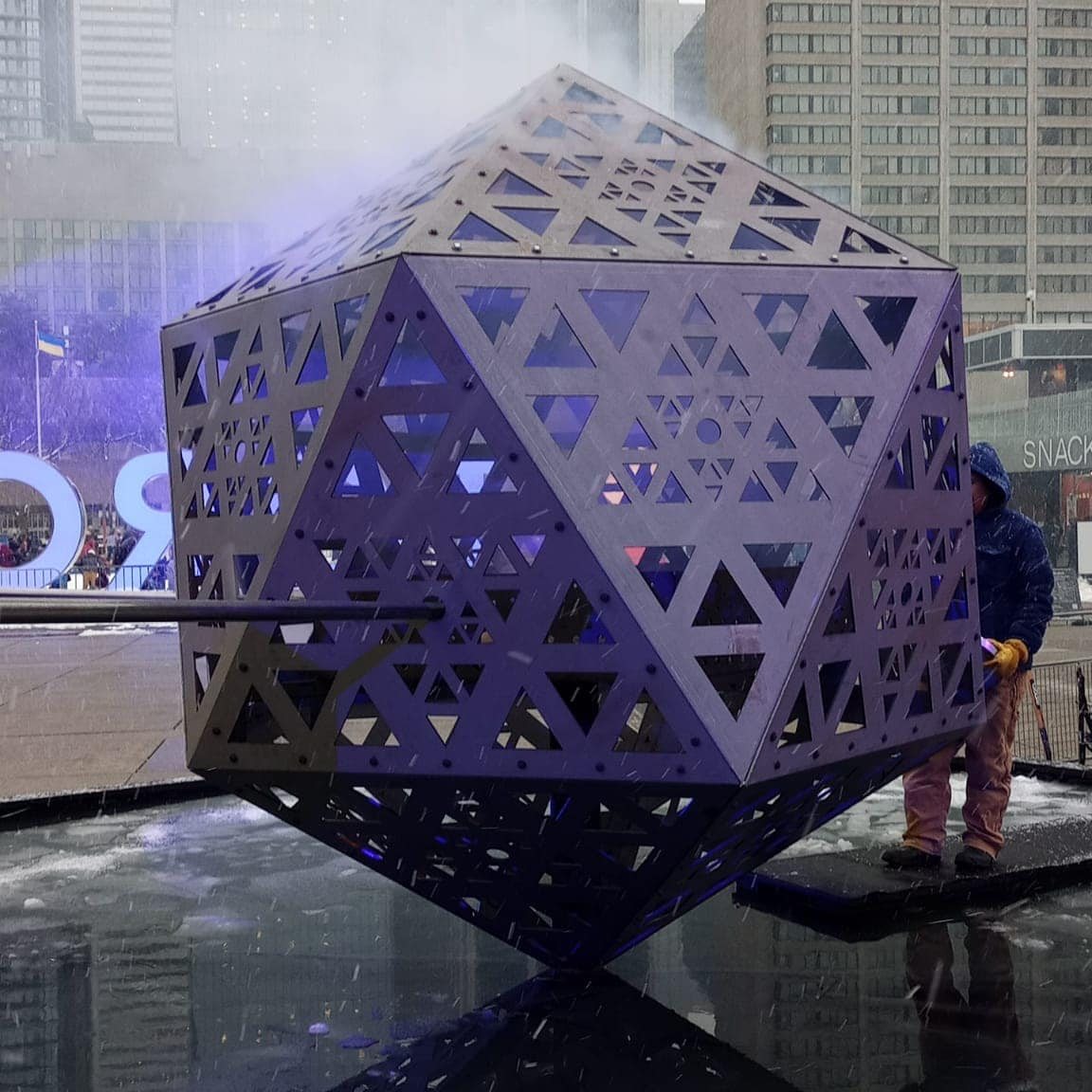
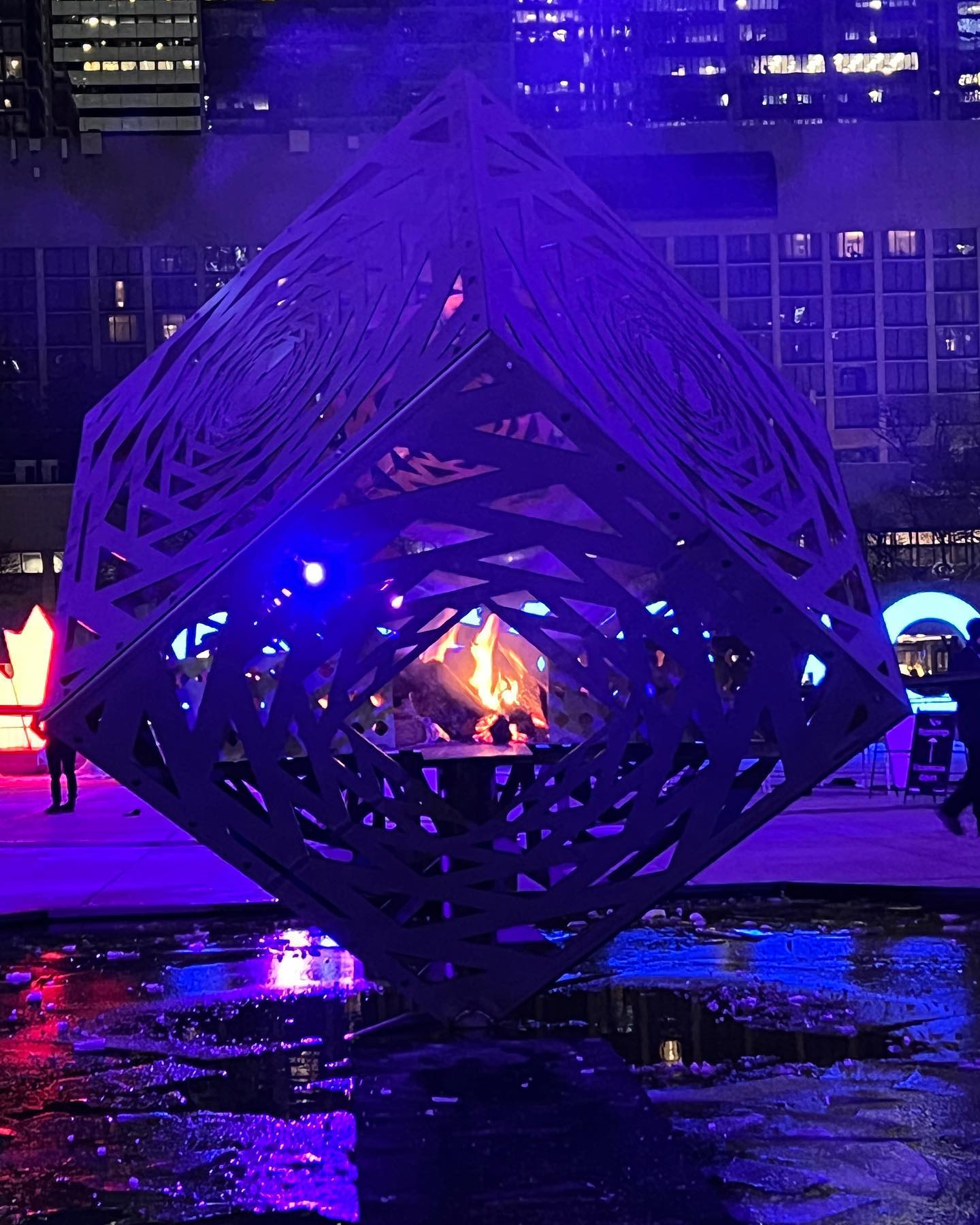
FireKeeper Clinton Powless stoking the Icosahedron at the Burn.
Clinton Powless; FireKeeper at the Icosahedron - The Burn.
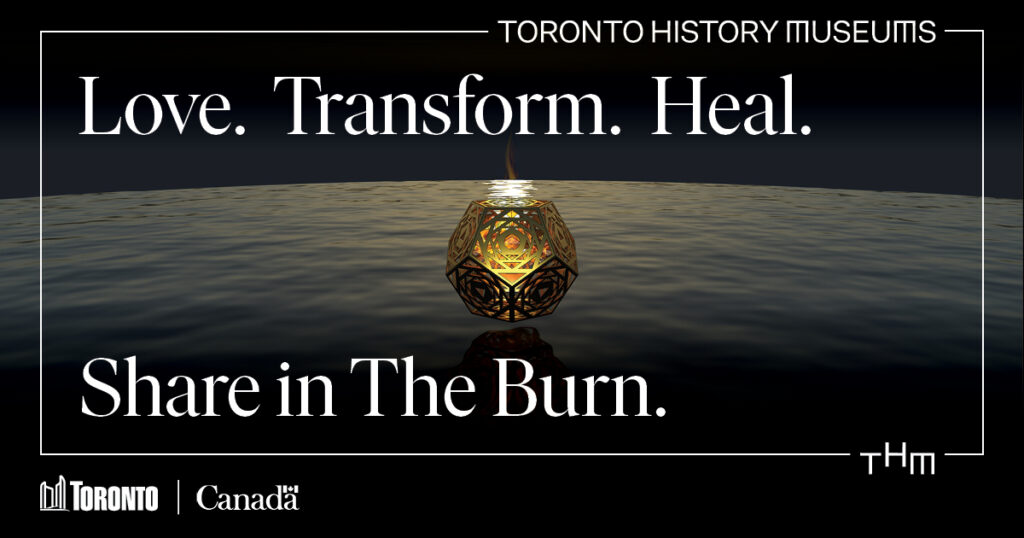
Catherine Tammaro was one of the three principal creators of The Burn, a major City of Toronto public art and civic healing project developed to
commemorate the impact of the COVID-19 pandemic. The installation formed part of the City's Stronger TOgether initiative, which
invited residents to reflect on grief, resilience, and collective recovery.
The Burn consisted of a series of sculptural travelling vessels that toured more than twenty locations across Toronto between January and March 2023.
At each stop, members of the public were invited to hold a cedar sphere, reflect on a personal intention for healing, remembrance, forgiveness, or hope, and place t
he sphere into one of the vessels. The spheres accumulated throughout the city before being brought to Nathan Phillips Square, where they were ceremonially
burned over a 24-hour period on the third anniversary of the World Health Organization's declaration of the COVID-19 pandemic. The resulting ashes were later mixed
into soil and distributed to gardens across Toronto as a lasting symbol of renewal and collective healing.
The project was created collaboratively by:
Roger Mooking
Javid JAH (Jah Qube)
Catherine Tammaro
Umberene Inayet
Tammaro served as far more than a contributing artist. As the project's Wyandot Elder, she was responsible for embedding Indigenous cultural knowledge, ceremonial
protocols, and teachings about transformation into the conceptual framework of the installation.
Her contributions included:
Developing the Indigenous spiritual and ceremonial dimensions of the work.
Bringing Wyandot understandings of fire as a transformative, rather than destructive, force.
Helping shape the participant experience around intention, release, remembrance, and renewal.
Guiding the closing ceremony so that it functioned as both a public artwork and a communal healing event
rooted in Indigenous principles of reciprocity and relationship.
In interviews about the project, Tammaro described The Burn as creating emotional and spiritual space for people to grieve together while transforming
sorrow into healing. She explained that the installation carried "tremendous spiritual potential, both individually and collectively for the city itself," and emphasized
that participants were invited not simply to observe but to actively engage in a shared process of release and renewal.
The Burn represents an important example of Indigenous knowledge and Sacred Geometry informing civic public art at a municipal scale. Rather than functioning as a static memorial, it was conceived
as a participatory energetic ritual in which thousands of Torontonians contributed to a living artwork. Through cedar, fire, water, sound, movement, and ceremony, the project transformed personal
experiences of loss into a collective act of remembrance and hope.
Within Catherine Tammaro's broader artistic practice, The Burn aligns with her longstanding exploration of ancestral continuity, Indigenous presence, ceremony, memory,
and the relationship between people, land, and spirit. It also stands as one of the highest-profile public commissions of her career, placing
ceremonial knowledge at the centre of a city-wide act of commemoration.
0 comments on “The Burn ~ Toronto History Museums”